


When the Gulf War ended in 1991, the world largely moved on. For many veterans, however, the war never really stopped.
Years after returning home, thousands of Gulf War veterans began reporting a strange and unsettling pattern of health problems—problems that didn’t fit neatly into existing medical categories. Fatigue that never lifted. Headaches that arrived without warning. Muscles that ached as if the body were aging too fast. Minds that felt foggy, unreliable, unfamiliar.
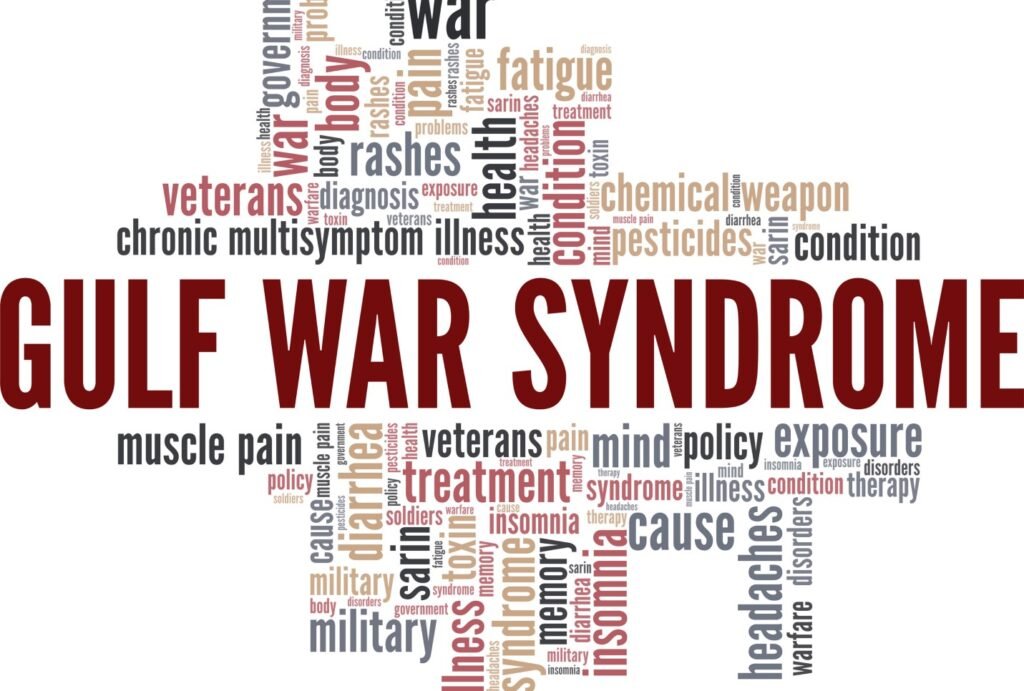
What emerged from these shared experiences is now widely known as Gulf War Syndrome—a complex, chronic condition that continues to puzzle researchers and challenge healthcare systems more than three decades later.
What Is Gulf War Syndrome?
Gulf War Syndrome (also called Gulf War Illness) is not a single disease. It is a cluster of persistent symptoms affecting veterans who served in the 1990–1991 Gulf War, particularly those deployed to Kuwait, Iraq, and surrounding regions.
What makes this condition especially difficult is its inconsistency. Two veterans might share the same diagnosis but experience entirely different combinations of symptoms. There is no single lab test, no definitive scan, no clear biological marker—only patterns that repeat often enough to demand attention.
Despite early skepticism, medical consensus has shifted. Gulf War Syndrome is now recognized as a real and disabling condition, not psychological weakness or stress-related illness, as it was once unfairly dismissed.
Common Symptoms of Gulf War Syndrome
The symptoms of Gulf War Syndrome are wide-ranging, often overlapping, and frequently chronic. Most veterans experience several at once.
Physical Symptoms
-
Persistent fatigue unrelated to activity
-
Muscle pain and joint stiffness
-
Headaches and migraines
-
Gastrointestinal issues such as diarrhea or abdominal pain
-
Shortness of breath and chronic cough
-
Skin rashes and unusual sensitivities
Neurological and Cognitive Symptoms
-
Memory loss or difficulty concentrating
-
Brain fog and slowed thinking
-
Sleep disturbances and insomnia
-
Tingling or numbness in extremities
-
Sensitivity to light, sound, or chemicals
Psychological and Emotional Effects
-
Mood swings
-
Depression or anxiety
-
Irritability
-
Reduced stress tolerance
What stands out is the persistence. These are not symptoms that come and go. Many veterans report living with them for decades, often worsening with time rather than improving.
Possible Causes: Why Did This Happen?
The exact cause of Gulf War Syndrome remains one of modern medicine’s most complex unanswered questions. However, current research strongly suggests that toxic exposure, rather than combat stress, lies at the heart of the illness.
1. Chemical Exposures
Veterans were exposed to a mix of chemicals rarely encountered together:
-
Nerve agent prophylactics (such as pyridostigmine bromide pills)
-
Pesticides used extensively in living quarters
-
Smoke from burning oil wells
-
Low-level exposure to nerve agents released during weapons depot demolitions
Individually, these exposures might not cause long-term harm. Combined—and under extreme conditions—they may overwhelm the nervous system.
2. Neurological Damage
Research increasingly points to damage in the brain’s white matter and disruptions in signaling between neurons. This could explain why cognitive, physical, and sensory symptoms overlap so often.
3. Mitochondrial Dysfunction
Some studies suggest that Gulf War Syndrome may involve impaired cellular energy production. When cells can’t generate enough energy, fatigue, muscle weakness, and neurological issues naturally follow.
4. Genetic Vulnerability
Not every deployed soldier developed Gulf War Syndrome. Genetics may play a role in how individuals metabolize toxins, making some veterans more vulnerable than others.
Why Diagnosis Is So Difficult
One of the cruelest aspects of Gulf War Syndrome is how invisible it can be.
Standard medical tests often come back “normal.” Imaging scans may show nothing alarming. Bloodwork might look fine. As a result, many veterans spent years being told their symptoms were stress-related, psychosomatic, or exaggerated.
This lack of clear diagnostic criteria delayed recognition and treatment—and eroded trust between veterans and healthcare providers.
Today, diagnosis is typically clinical, based on symptom patterns and service history rather than a single test.
Current Research and Scientific Progress
While there is still no cure, research into Gulf War Syndrome has accelerated in recent years.
Brain Imaging Advances
Modern MRI techniques have revealed subtle structural changes in the brains of affected veterans—changes that were undetectable with older technology.
Neuroinflammation Studies
Chronic inflammation in the brain is now considered a leading theory, potentially linking chemical exposure to long-term neurological symptoms.
Targeted Treatment Trials
Researchers are exploring treatments aimed at:
-
Reducing inflammation
-
Improving mitochondrial function
-
Supporting nervous system repair
Though results are still emerging, these studies represent a shift from symptom management toward addressing underlying mechanisms.
Living With Gulf War Syndrome
For veterans and their families, Gulf War Syndrome is not just a medical condition—it’s a daily negotiation with uncertainty.
Careers have been cut short. Relationships strained. Simple tasks can feel overwhelming on bad days. Many veterans describe grief—not only for their health, but for the person they were before the illness took hold.
Yet resilience is a common thread. Veterans have formed advocacy groups, pushed for recognition, and shared their stories to ensure this condition is neither forgotten nor dismissed again.
The Road Ahead
Gulf War Syndrome sits at the intersection of medicine, military history, and ethics. It forces difficult questions: How do we protect soldiers from unseen dangers? How do we respond when science lags behind lived experience? And how long should veterans have to fight for validation after serving their country?
While definitive answers remain elusive, one thing is clear—Gulf War Syndrome is real, its impact is profound, and continued research is not optional. It is a responsibility.
For the veterans still living with its effects, recognition is not enough. Progress matters. And time, for many, is already in short supply.